
Home > Movement Coaching
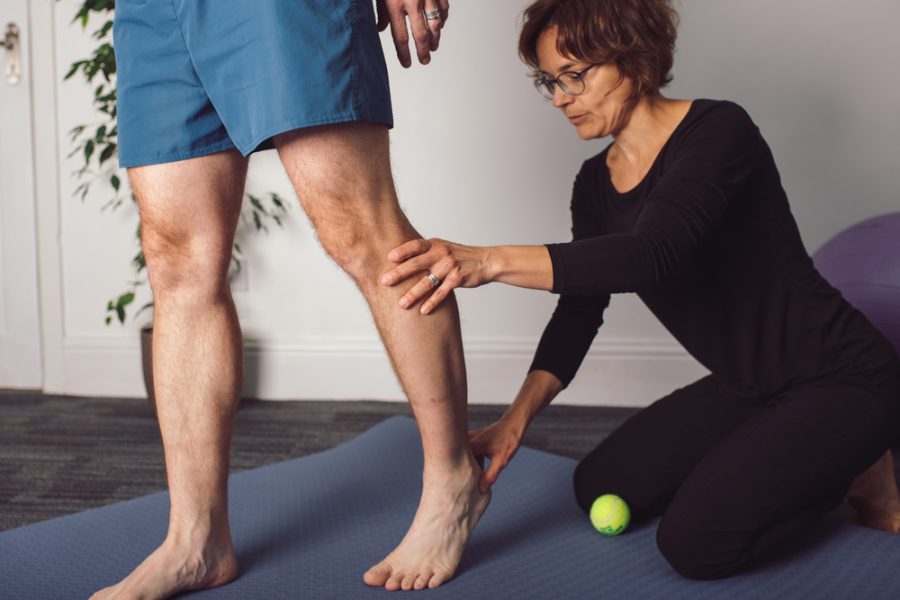
The whole point of having a great dynamic posture is to be prepared to move and allow gravity to travel through your body, so every cell benefits from movement.
Imagine gravity is not your enemy, but your therapist.
Movement is deeply embedded in my practice.
In every session, we pay close attention to how you move, guiding you to become aware of your unique movement patterns. We use movement throughout each session as an effective way to release tension within the fascial layers. Movement reveals where restrictions exist while creating new, healthier connections throughout the body.
After manual work, movement helps integrate the release, making those newly available areas functional and accessible in everyday life. We teach movement patterns specific to your body so you can experience the benefits of better alignment, postural organisation, and efficient support—whether sitting, standing, exercising, or running. Your ability to continually organise and reorganise your body is the key to maintaining long-term health.
Bones for Life® and the Rolf Method of Structural Integration work seamlessly together to create lasting improvements in posture, movement, and overall wellbeing.
While Structural Integration focuses on releasing fascial tension and aligning the body for optimal support and balance, Bones for Life® builds on this foundation by strengthening bone health, improving coordination, and reinforcing efficient movement patterns.
Together, they help develop a resilient, well-organised body that moves with greater ease, strength, and adaptability—supporting both structural integrity and lifelong mobility.
Bones exist as a necessary response to gravity. The human skeleton is uniquely designed to allow us to stand upright on two legs, maintaining balance even while standing still.
Healthy bones depend on dynamic posture—the ability to sustain your body weight through efficient alignment while constantly adapting to changing demands. Even if you can stand and walk, poor alignment at the ankles, knees, hips, or spine interrupts the natural line of force. Over time this creates unnecessary wear, reduces efficiency, and compromises the signals that stimulate bone strength.
Dynamic posture is your body’s ability to unconsciously reorganise skeletal alignment from moment to moment according to the task at hand.
A body that is regularly challenged through dynamic movement becomes stronger, more resilient, and better able to cope with everyday demands. This happens when all parts of the body work together in harmony, just as nature intended.
Bones for Life® is a gentle yet powerful movement programme designed to improve posture, balance, flexibility, and bone health. It is especially beneficial for people living with osteoporosis or osteoarthritis.
Developed by Ruthy Alon, a pioneer of the Feldenkrais Method®, Bones for Life® restores natural, fluid movement while reducing stiffness and discomfort.
The programme simplifies key Feldenkrais principles into practical movements that improve everyday activities such as walking, sitting, standing up from a chair, and getting up from the floor. Once learned, these movements take only moments to practise and gradually become second nature.
Whether your goal is greater mobility, pain relief, stronger bones, or improved confidence, Bones for Life® provides a safe and effective path towards lifelong movement and independence.
Hands-on work can create profound structural change, but your movement habits determine whether those changes last.
Movement Intelligence focuses on how you move during everyday life—standing, walking, sitting, bending, breathing, and transitioning between movements. Many physical issues arise not from injury alone, but from unconscious movement habits repeated over many years.
This approach is gentle, exploratory, and educational rather than exercise-based or corrective.
Structural Integration creates balance and dynamic posture throughout the body. Movement Intelligence teaches the nervous system how to use this new freedom effectively.
Following a Structural Integration session, your tissues become highly adaptable. Fibroblasts become more active, collagen is more pliable, tissue hydration improves, and your body’s sensory awareness increases.
Movement acts as a teacher, telling the fascia which new patterns to stabilise.
Collagen fibres align according to the forces placed upon them. Following treatment, movement reinforces healthier lines of force and encourages long, gliding fascial networks.
Within 24–48 hours, collagen begins forming new cross-links.
Fascia behaves like a sponge. Gentle movement pumps fluids through the extracellular matrix, maintaining lubrication and tissue elasticity.
Structural Integration changes more than tissue—it retrains the nervous system.
Immediately after treatment, your proprioception is heightened, making it the ideal time to establish healthier movement habits.
To support fascial change, replace old habits, and expand your movement vocabulary, the quality of movement matters just as much as the quantity.
Speak to Martina and schedule your free introductory call today
It's never too late to change. Don’t let pain hold you back. Experience strength, freedom, and joy in movement.